Lead reactivation means getting back in touch with people who enquired, got a quote or bought from you before, but went quiet. It can work well for Australian small businesses, as long as you contact only people you’re allowed to, and give them a real reason to reply. Nobody publishes a reliable Australian success rate, so be wary of any promised percentage and measure your own.
This guide is for Australian service businesses (trades, clinics and the like) wondering whether their old list is worth working.
What is lead reactivation?
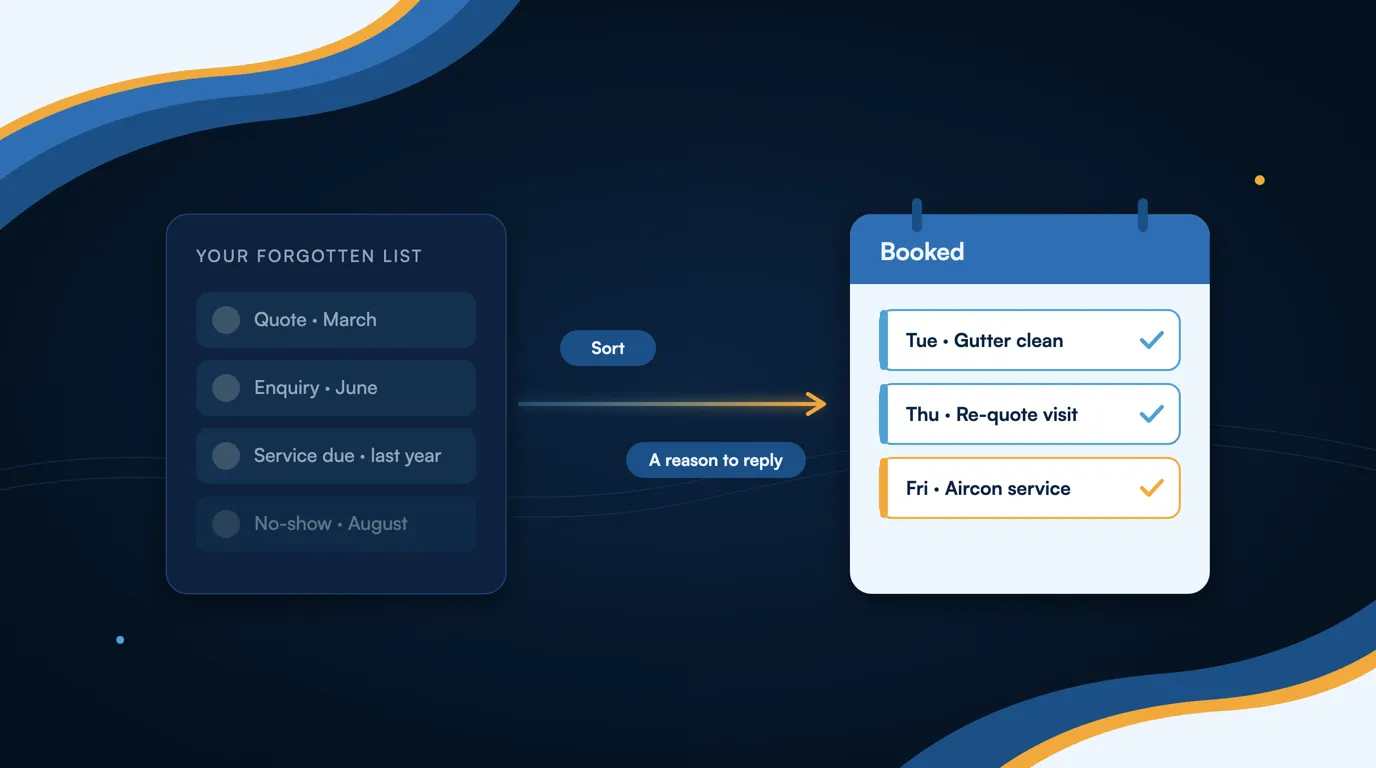
It’s following up the people already in your phone, inbox or job software who never became customers, or stopped being customers. For example:
- Quotes that went quiet: you quoted, they never said yes or no.
- Enquiries that didn’t book: they called or filled in a form, then nothing.
- Past customers who haven’t been back: a service that’s now due, or a job they mentioned “for later”.
- No-shows and cancellations.
It’s also called database reactivation or a win-back campaign. The idea is simple: these people already found you and showed interest, so the hardest part of winning a customer is done.
How does it work?
- Sort the list. Group contacts by what happened (quoted, enquired, past customer), when, and whether they agreed to hear from you.
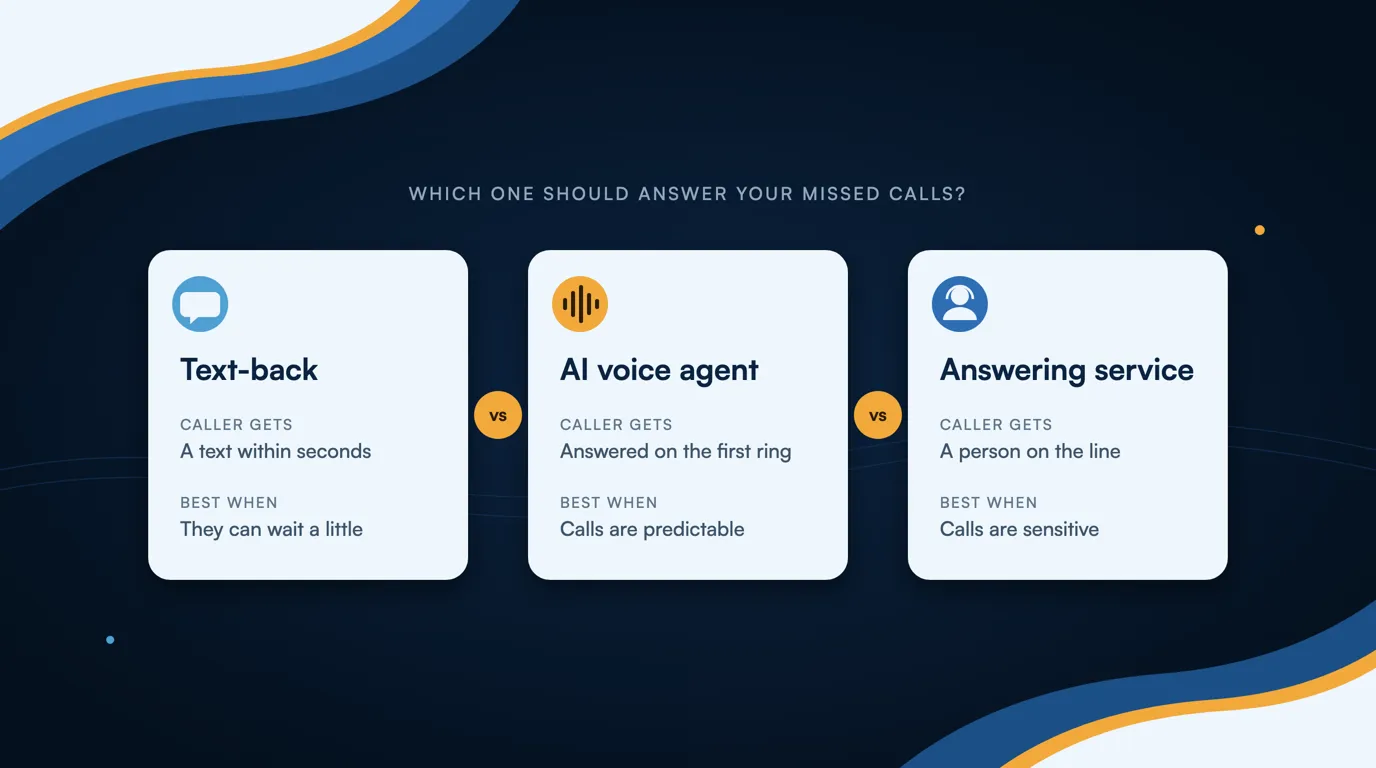
- Pick the right way to contact each group. Text the people you’re allowed to text, ring the ones you can’t text, and leave alone anyone who asked you to stop.
- Send a short, specific message with a reason to reply. For example, “Your gutters were last cleaned in May. Want us to book you in before the storms?” works far better than “Just checking in!”
- Get replies to a person or a booking calendar quickly, so the conversation doesn’t go cold again.
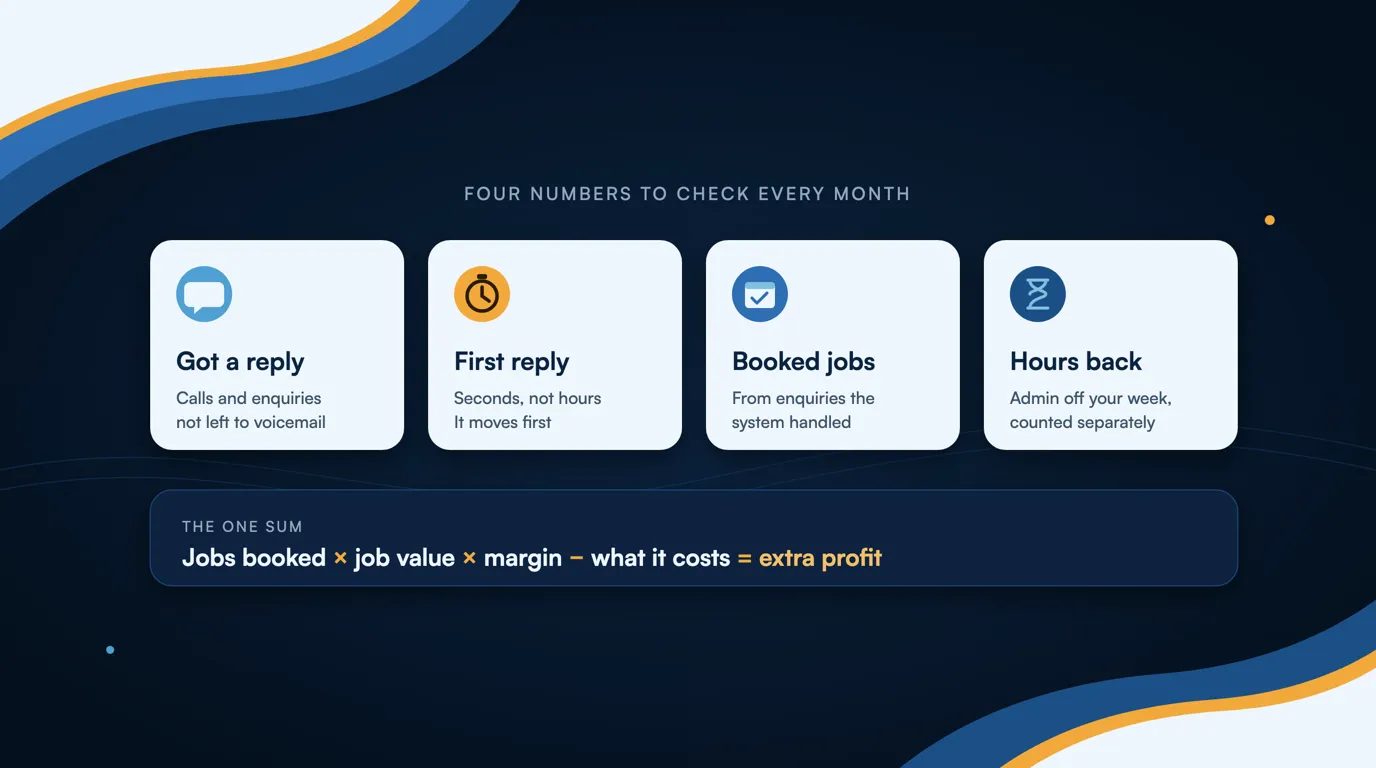
- Measure it: replies, bookings, revenue, and how many people opted out or complained.
Who’s on your forgotten list?
Most service businesses have more than they think: a year of quote PDFs, missed-call logs, website form emails, old job cards. For each person, you want:
- name and phone number (and email if you have it);
- what the job or enquiry was;
- when it was;
- what happened (booked, quoted, lost, and why if you know);
- whether, when and how they agreed to hear from you.
That last one matters most, because it decides how you can contact them.
Is lead reactivation legal in Australia?
Yes, done properly. Under the Spam Act, a follow-up text or email that offers your services is a marketing message, so you need the person’s consent. That usually means they ticked a box or said yes to hearing from you, or they’re a current customer and the message is about what they already have from you.
A past purchase on its own isn’t ongoing consent. ACMA, the regulator, says inferred consent doesn’t cover messages after someone has simply bought something once. In November 2026, it fined SpinTel $653,400 for emailing former customers, rejecting the argument that a past relationship was enough. You’ll see the opposite claimed online, including by AI tools, so be careful.
Old quotes and past customers without consent can often be phoned instead: check the number against the Do Not Call Register first, call within the allowed hours and say who you are. Here’s the full guide to what the Spam Act allows.
Does lead reactivation work?
It can, but be careful with anyone who promises a number. We couldn’t find a reliable, independent Australian benchmark for reply or booking rates, and the figures online vary wildly. Even AI tools quote different rates in different answers.
What independent research does show is who it works best with. Studies on winning back lost customers (in the Journal of Marketing and the Journal of Retailing) found that people are more likely to come back when:
- their first experience with you was good, for example they trusted you or would have recommended you;
- your message deals with the reason they went quiet, whether that was price, timing or service;
- you give them real value for coming back, not just a reminder that you exist.
In practice, that means a sorted list and a specific, relevant message will beat a blast to everyone.
We’ll publish our own results here as client campaigns finish.
The only number that really matters is yours. Run it on a sorted list, and count the replies, bookings and revenue, and how many people opted out.
Which businesses does it suit?
- Repeat or seasonal work: servicing, maintenance, cleaning, pest control, air conditioning before summer, gutters before winter. There’s a natural, genuine reason to get back in touch.
- Bigger, considered jobs: renovations, solar, landscaping, where people put decisions off rather than say no. (What to do with old quotes has sample messages.)
- Businesses with a few hundred or more past contacts, so there’s enough to work with.
It suits one-off emergency work least: once the blocked drain is fixed, there’s no reason to come back. It’s also hard if your list has no consent records and nobody has time to ring people.
Why we switch it on before any ads
You’ve already paid for these leads, through ads, quoting time and site visits. Following up the ones you’re allowed to contact costs little more. It’s a quick test with people who already know you, and it shows up problems in your data, such as missing consent, wrong numbers or no record of why quotes were lost. You’d want those fixed before you spend on ads anyway.
How Brightwater Digital does it
Our Wake Up Your Dead Leads system sorts a business’s list before anything is sent. People who agreed to hear from the business, and current customers, get friendly texts with the business’s name and an easy opt-out. Old quotes without consent go on a call list, checked against the Do Not Call Register, for the owner to ring. And the business’s quote forms get a consent box, so next year’s leads can be followed up properly. Replies are handed to the owner or booked straight into the calendar.
Sources
- ACMA: Avoid sending spam · SpinTel pays $653K penalty for spamming former customers
- Kumar, Bhagwat and Zhang, “Regaining ‘Lost’ Customers”, Journal of Marketing (2015): summary
- Tokman, Davis and Lemon, “The WOW factor: Creating value through win-back offers to reacquire lost customers”, Journal of Retailing (2007): record
- Do Not Call Register: subscriptions for businesses
General information, not legal advice.