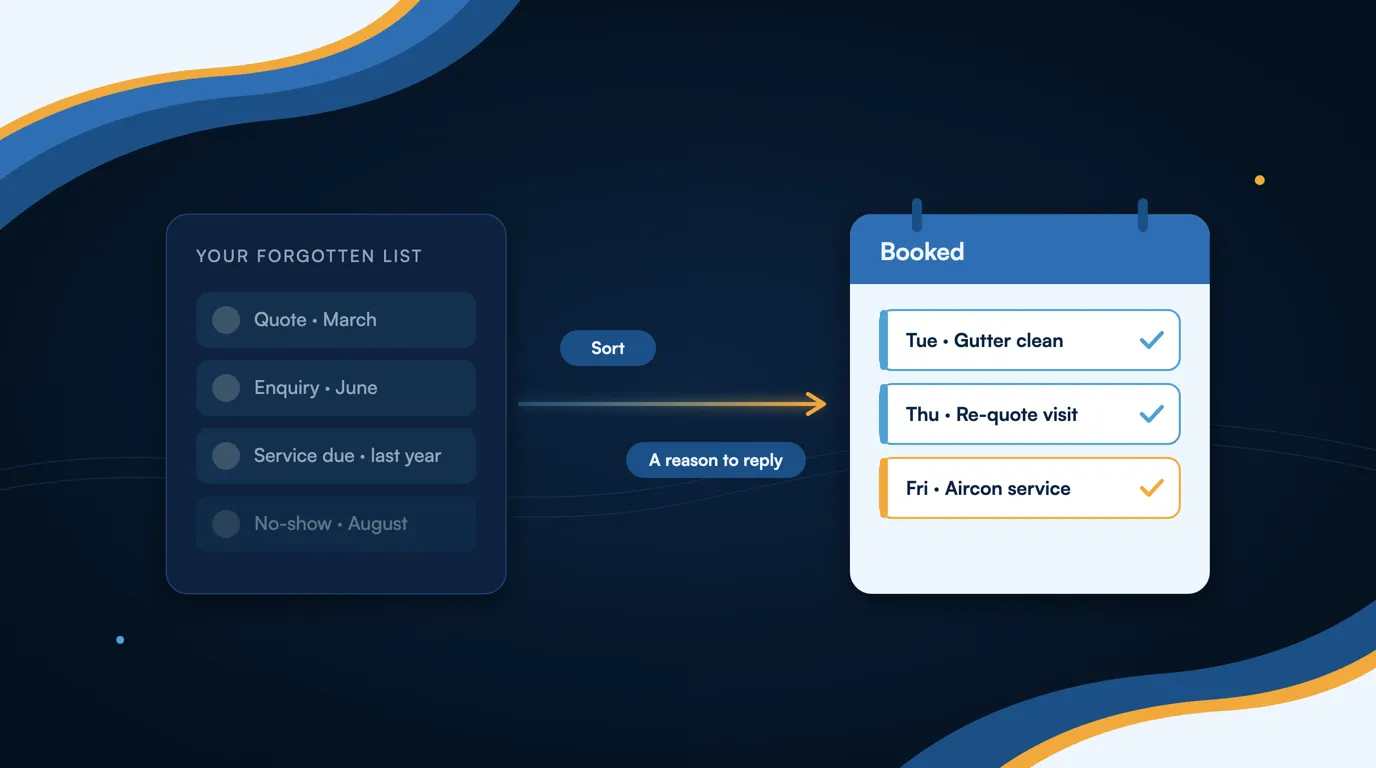
Sort them, don’t spam them. Go through your old quotes and split them three ways: ring the ones worth chasing, text only the people who agreed to hear from you, and close out the rest. When you do get back in touch, offer an updated quote rather than chasing the old price. Then change how you quote, so fewer go quiet next time.
This guide is for Australian trades and service businesses with a pile of quotes that never got an answer.
Why do customers go quiet after a quote?
Mostly because they haven’t decided, not because they’ve said no. Silence is easier than an awkward conversation. The common reasons:
- They’re still collecting quotes. Consumer agencies in every state tell people to get at least three written quotes before hiring a tradie, so most quotes lose by design.
- They picked someone else and didn’t think to tell you.
- The price was more than they expected, and saying no feels awkward.
- The quote raised a question about what’s included, or when you could start, and they haven’t asked it.
- Someone else has to agree: a partner, a landlord, a strata committee, an insurer.
- The timing moved. The job got less urgent, or the money went somewhere else.
- It got buried. A PDF in an inbox, and nobody followed up.
- They were only checking prices.
Most of these are “not yet” rather than “no”. That’s why a well-timed follow-up can work, and why chasing every quote forever doesn’t.
Is it worth following up a quote that’s a few months old?
Often, yes, if the job is worth having and the customer hasn’t told you no. They found you, you’ve seen the job, and the quoting work is already done. Pick the old quotes worth the effort: the bigger jobs, the ones where the work still needs doing, and the customers you’d like to have.
Don’t pretend the old price still stands, though. Materials and your rates may have moved since you quoted. A quote becomes binding once the customer accepts it, so an old quote with no expiry date can leave you stuck with last year’s price. Offer to come back and re-quote instead.
Who can I text, and who should I ring?
In Australia, a follow-up like “Still keen on that quote? I’ve got Thursday free” offers a service, so under the Spam Act it’s a marketing message. You can only send it to someone who agreed to hear from you, for example by ticking a consent box on your quote form. An old quote on its own usually isn’t consent. (Here’s what the Spam Act allows.)
Phone calls have their own rules. Check the number against the Do Not Call Register first (it’s free for up to 500 numbers a year), ring within calling hours, and say who you are and why you’re calling. So for most old quotes, the right tool is the phone, and for the people who agreed to hear from you, it’s a text.
| The quote | They ticked the consent box | No consent |
|---|---|---|
| Recent and still worth having | Text a follow-up | Check the Register, then ring |
| A few months old, still worth having | Text and offer to re-quote | Check the Register, then ring and offer to re-quote |
| Small, old, or the job’s clearly gone | One closing text, or let it go | Close it off in your records |
| They said no, or asked you to stop | Close it | Close it |
What should I say?
Keep it short, use their name and the job, and make it easy to say “no thanks”. Three examples:
A phone call to an old quote (number checked against the Register):
“Hi Sarah, it’s Dave from Coastal Plumbing. I’m ringing about the hot water quote we did for you back in March. Did you end up getting that sorted?”
If yes: “Good to hear. I’ll close it off on my end. Thanks, Sarah.”
If not yet: “No worries. Prices have moved a bit since March, so I’m happy to send you an updated quote. Would that help?”
A text to someone who ticked the consent box:
Hi Sarah, Dave from Coastal Plumbing here. Your hot water quote from March has expired, and prices have shifted a bit since. Want me to send an updated one? No worries if you’ve sorted it already. Reply STOP to opt out.
A last message before you close the file (again, only to someone who agreed to texts):
Hi Sarah, it’s Dave from Coastal Plumbing. I haven’t heard back about the hot water quote, so I’ll close it off for now. If the job comes up again, just reply here and I’ll re-quote. Reply STOP to opt out.
Every marketing text needs your business name, a way to contact you and a working way to opt out. “Reply STOP” only works from a number that can receive replies.
One rewrite. The message most tradies send:
Just checking in to see if you had any questions regarding the quote we sent through.
It’s vague and easy to ignore. Be specific:
Hi Sarah, Dave from Coastal Plumbing. Did the hot water quote answer everything? Happy to talk through the options if the price was more than you expected. Reply STOP to opt out.
The second names the job, guesses the real reason they’ve gone quiet, and gives them an easy way to reply.
When should I give up and close a quote?
After a call or two and one closing message with no answer, close it. Mark why, if you know (went with someone else, price, timing, no answer), so your list shows you which quotes are worth chasing next time. Only set a reminder to come back if they told you “later” or “next year”. A list of closed quotes with reasons is more useful than a list of hundreds of “maybes”.
How do I stop quotes going quiet next time?
Most of the fix happens when you quote:
- Put an expiry date on every quote. It gives the customer a reason to decide, and gives you a natural reason to get back in touch.
- Say what happens next. “I’ll ring you Thursday to go through it” works better than sending a PDF and waiting.
- Follow up within a day or two, while you’re still front of mind.
- Make the quote easy to follow: what’s included, what isn’t, and when you can start.
- Add a consent box to your quote form. Unticked by default, saying who will contact them, how, about what, and “until I opt out”. Every quote that ticks it can be followed up by text later. (The wording, and why each part matters.)
How Brightwater Digital handles this
Brightwater Digital’s Wake Up Your Dead Leads system works through a business’s old quotes and enquiries. It sorts the list first. People who agreed to hear from the business get friendly texts with the business’s name and an opt-out. Old quotes without consent go on a call list, checked against the Do Not Call Register, for the owner to ring. And the quote forms get a consent box, so next year’s quotes can be followed up properly.
Sources
- WA Consumer Protection: estimates, quotes and deposits
- NSW Government: getting quotes
- Consumer Affairs Victoria: giving quotes, for tradespeople
- ACMA: Avoid sending spam
- Do Not Call Register: subscriptions for businesses
Checked against Australian government guidance in November 2026. General information only, not legal advice.